Russia's first UAV-based pipeline monitoring technology developed in the absence of communications
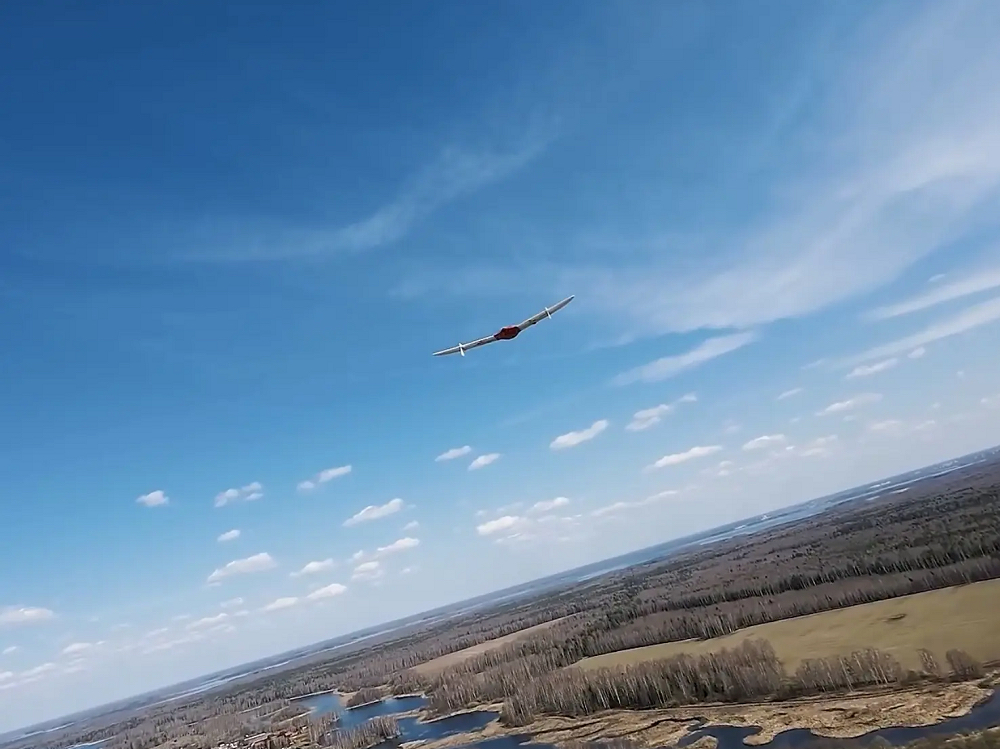
Scientists from the Gubkin Russian State University of Oil and Gas (National Research University), together with engineers from Russian companies, have developed and successfully tested Russia's first technology for remotely collecting data from main oil and gas pipelines using UAVs. Unlike other solutions, where drones perform the survey themselves, this domestic technology is the first to use drones to collect data from stationary sensors in the absence of communications. This opens up new opportunities for pipeline operations in Siberia and the Far East. Receiving timely information on pipeline conditions increases infrastructure reliability and reduces the risk of environmental disasters.
Currently, operational data from sensors monitoring corrosion and other pipeline parameters is often collected manually by personnel visiting monitoring points along the pipeline route. This is time-consuming, expensive, and carries risks for those working in challenging climates.
"We proposed using drones as aerial survey devices. Instead of sending a human to a hard-to-reach area, we load the UAV with a route map containing the coordinates of control and measurement points, and it autonomously flies along the route, collecting the accumulated data. This isn't just automation, but a fundamentally new level of safety and efficiency, especially for regions with harsh climates and complex terrain," noted project participant Alexander Kozlov, a postgraduate student in the Faculty of Design, Construction, and Operation of Pipeline Transport Systems at Gubkin University.
The essence of the development lies in integrating existing monitoring infrastructure with unmanned technologies. Data collection devices are placed at standard control and measurement points already installed along pipeline routes. They receive information from various sensors (for example, those measuring corrosion rates), accumulate it, and store it in non-volatile memory. When a drone equipped with a receiving module flies over such a point, the data is transmitted wirelessly (Bluetooth) with low power consumption. The entire process takes no more than five seconds per point.
"Data transmission occurs over a distance of approximately 100 meters, so the UAV doesn't need to descend or hover—it simply flies at a safe altitude. This simplifies the requirements for the UAV and improves the safety of the flight," explained Alexander Kozlov.
The system's first field trials were successful. A domestically produced Geoscan-401 quadcopter was used during the tests. Specialists worked through all stages—from transmitting data from sensors at the control and measurement station to reading it from the UAV. The system utilizes commercially available Russian equipment, including PKM-TST corrosion monitoring subsystems, which have been used for over ten years at Russian oil and gas facilities.
The technology is particularly important for Russia's eastern regions, where new main pipelines are being actively built and operated. In these areas, the distance between compressor and pumping stations can reach up to 400 kilometers, and the communications infrastructure is poorly developed. According to the developers, the use of drones not only reduces operating costs but also increases the frequency of monitoring, which directly impacts safety. "It's important for us not just to obtain data, but to obtain it on time. When it comes to corrosion or deformation, even a few months' delay can have critical consequences. A drone allows us to take readings as often as daily, if necessary, without additional logistics costs. This is a new standard of reliability for main pipelines," emphasized Alexander Kozlov.
In the future, the system can be supplemented with laser terrain scanning and a camera for visual inspection, as well as gas leak detection sensors. According to the developers, the next stage will be pilot testing on actual main pipeline routes, after which the technology can be recommended for widespread implementation at Russian oil and gas facilities.