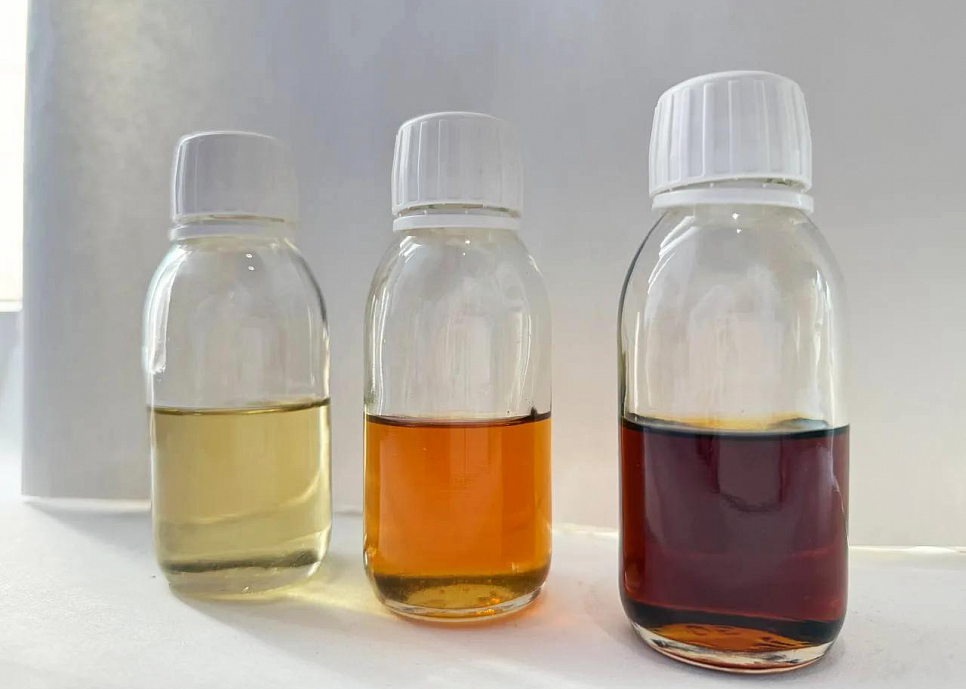
Scientists have developed a reagent from frying oil for oil sludge processing
Scientists from the Gubkin Russian State University of Oil and Gas (National Research University) have developed biodegradable reagents based on vegetable oils and food service waste that can extract up to 30% of hydrocarbons from sludge—one of the most difficult and hazardous wastes in the oil and gas industry.
According to the research team, over 100 million tons of oil sludge have accumulated in Russia, with nearly 180,000 tons generated annually. This waste has accumulated in regions with active oil production and refining activities—Western Siberia, the Republic of Tatarstan, the Republic of Bashkortostan, and others. Oil sludge is formed at all stages of oil refining and contains hydrocarbons, water, mechanical impurities, and natural stabilizers (asphaltenes and resins), which form a strong film at the phase boundary.
A reagent developed at Gubkin University will allow approximately 30% of the accumulated oil sludge to be returned to the oil refining process, recovering valuable light hydrocarbon fractions. The remaining heavy fractions can be used as valuable feedstock for refining processes such as coking, visbreaking, and bitumen production.
Scientists synthesized the reagent from plant-based raw materials—waste cooking and rapeseed oils—as well as widely available alcohols—n-butanol, isobutanol, and 2-ethylhexanol. The resulting compounds specifically break down the stable aggregates of natural stabilizers (resins and asphaltenes) responsible for the resistance of oil sludge to separation.
Because the reagent is based on plant-based raw materials, it decomposes during sludge processing, making it environmentally safe.
"The problem of oil sludge disposal is quite pressing." Separating sludge into oil, water, and solids is a complex task, so waste often sits in storage pits for years, polluting the environment. We've found a way to combat waste using other waste: we take used frying oil from Russian restaurants and cafeterias and use it to break up long-standing oil sludge "cemeteries." "This provides a double benefit: we clean up old contaminants and prevent the creation of new ones," said Yegor Burov, associate professor at Gubkin University.
According to reagent testing, the hydrocarbon extraction efficiency was approximately 30% of the original oil sludge mass. "Now, when supplies of imported reagents are difficult, such developments are becoming not just useful, but critically important for the environment and the country's technological independence," noted Yegor Burov.
The development of domestic oil sludge processing technologies, which will simplify and reduce the cost of this process, opens up new opportunities for ensuring the country's environmental safety. The new reagent is created from Russian raw materials.
Scientists have found that different reagent compositions are optimal for different types of oil sludge. For mixed sludge, a reagent based on rapeseed oil and isobutanol yielded the best results. For high-asphaltene sludge, a combination of used oil and n-butanol was used. The new technology allows for tailoring the reagent to the specific composition of the waste.