Lecture on MLOps Approaches in the Banking Sector
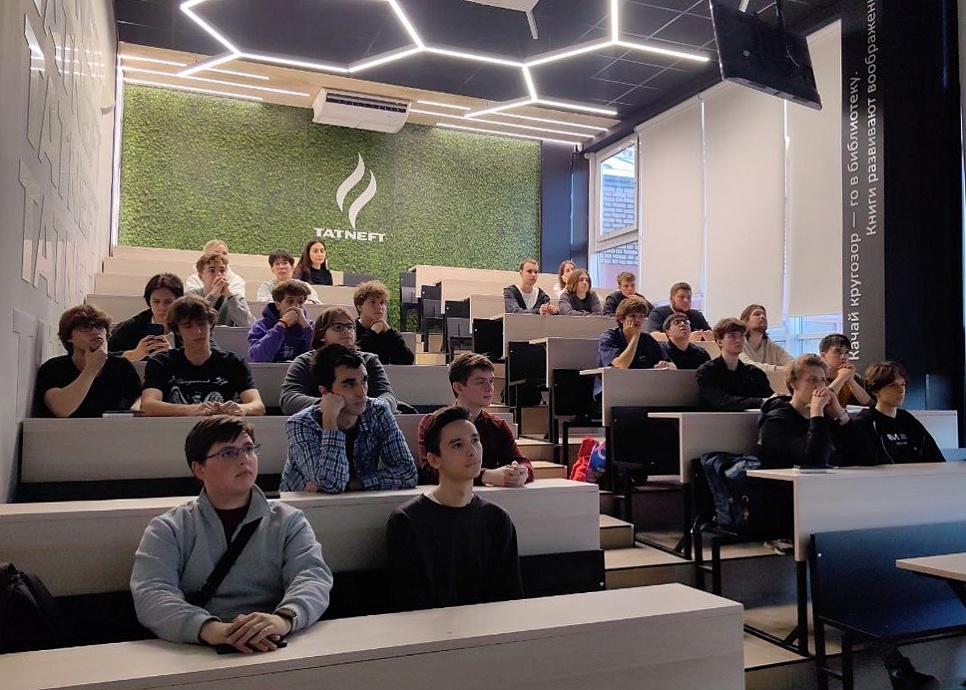
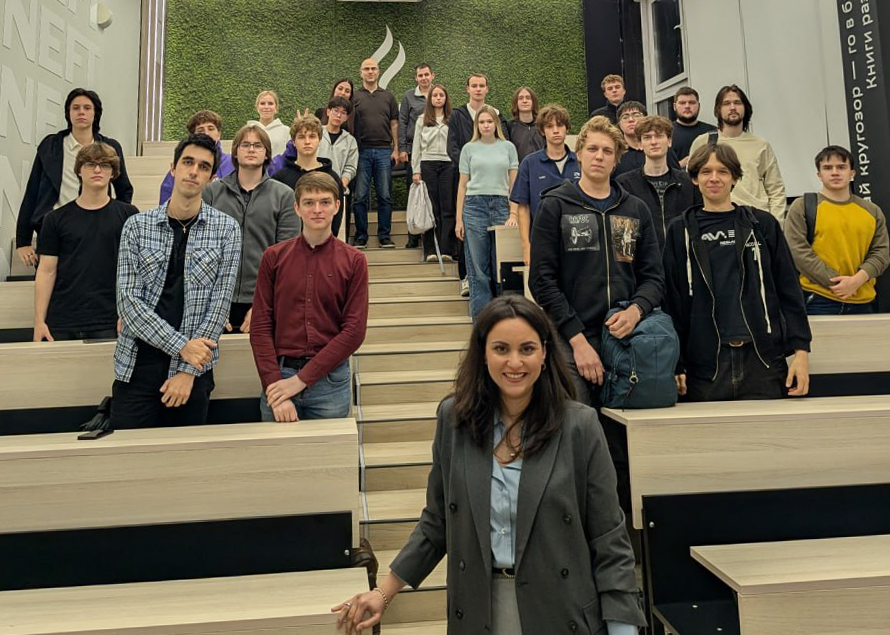
On September 28, 2026, Gubkin University hosted a lecture titled "Methods for Organizing and Applying MLOps Approaches to Expand the Use and Scaling of Artificial Intelligence Methods in Russian Banks," organized by the Student Scientific Society.
The speaker was Ani Kocharyan, a lead analyst on projects for VTB Bank (PJSC) and Innotech Group. During the lecture, she introduced participants to approaches for organizing the development, deployment, and maintenance of machine learning models in large organizations, using the banking sector as a case study.
The session began with an overview of fundamental machine learning concepts, the differences between supervised and unsupervised learning, and key task types such as regression and classification. Special attention was paid to the concepts of MLOps and ModelOps and their roles in transitioning from an experimental model to a robust, production-ready solution.
The central theme of the lecture was the ML model lifecycle. Participants traced the project journey from the initial problem definition by the business stakeholder and data availability analysis through to development, independent validation, testing, production deployment, monitoring, maintenance, and—where necessary—model decommissioning. The speaker emphasized that the ML model lifecycle is not a linear sequence of stages but an iterative process, the depth and complexity of which depend on the solution's maturity and the requirements for its industrial application.
A separate section focused on data handling. Topics covered included connecting to and analyzing data sources, statistical data quality control, data cleaning and preprocessing, feature generation and selection, and the splitting of datasets into training, testing, and validation sets. Versioning—not only of the source code and the model itself but also of the data used—is crucial for the reproducibility of ML solutions.
Participants also learned about role distribution within an ML project. Developing a production-grade solution may involve a Data Scientist, Data Engineer, MLOps/ModelOps Engineer, Business Analyst, and specialists in information security and independent validation. Their collaboration ensures that model quality, business requirements, infrastructure reliability, data security, and the solution's long-term maintainability are all addressed simultaneously.
Significant attention was paid to the validation and testing processes for ML models. In addition to mathematical quality metrics, preparing a model for deployment involves evaluating its stability, input data correctness, alignment with business processes, and documentation completeness. Production deployment may utilize dedicated environments for integration and functional testing, load testing, and acceptance testing.
Ani Kocharyan also discussed the application of CI/CD approaches to automate the build, testing, and delivery of ML solutions. The MLOps process employs version control systems, containerization, model registries, and orchestration tools to standardize the deployment of new model versions and minimize manual operations.
The lecture gave participants insight into the organizational and technological processes behind the industrial application of artificial intelligence and introduced them to the skill sets required to build and maintain modern ML systems.
This event is part of the "Strategy of New Discoveries" development program for the Gubkin University Student Scientific Society.
Student Scientific Society on social media:
VKontakte
Rutubе
Теlеgram
MAKS