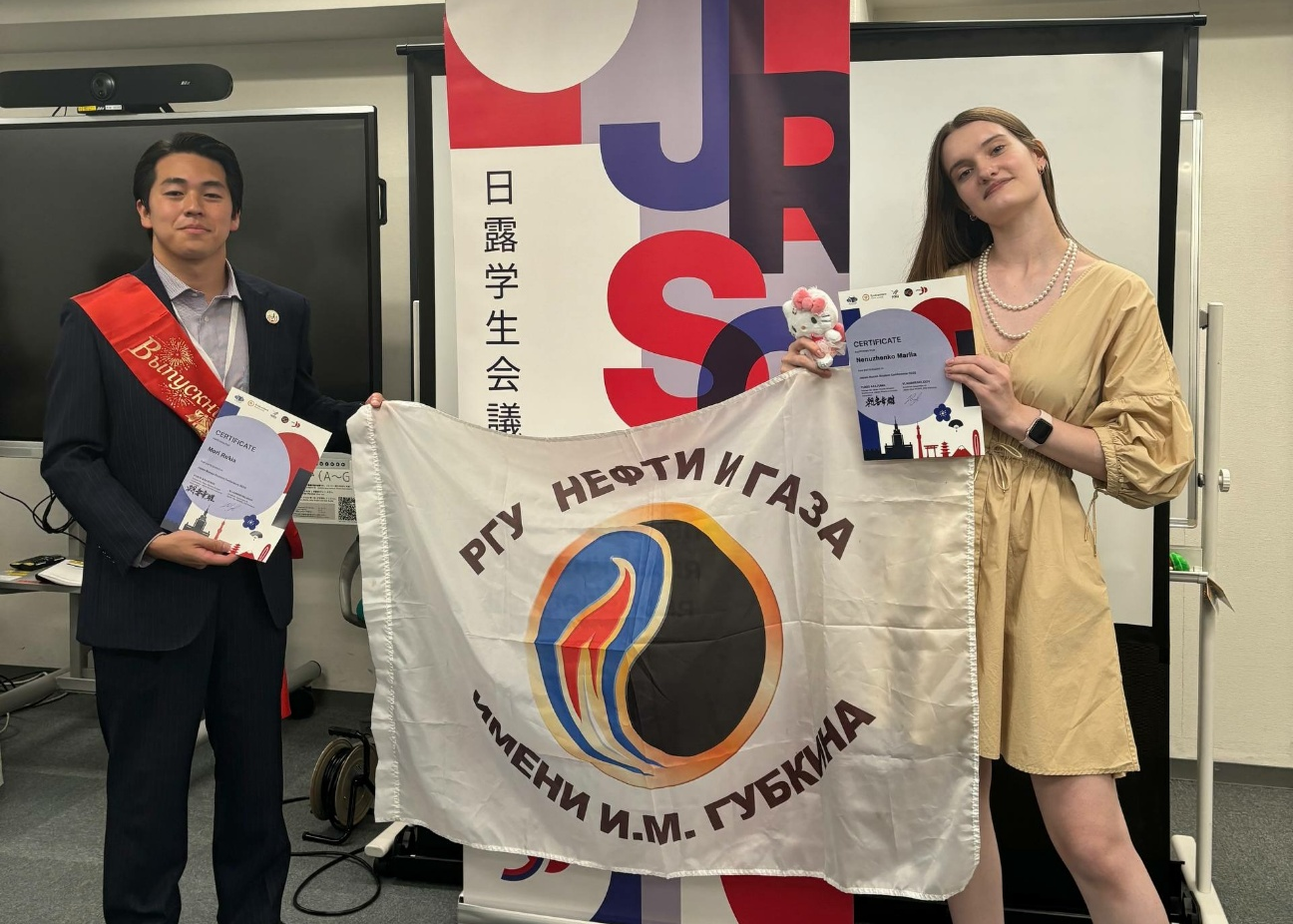
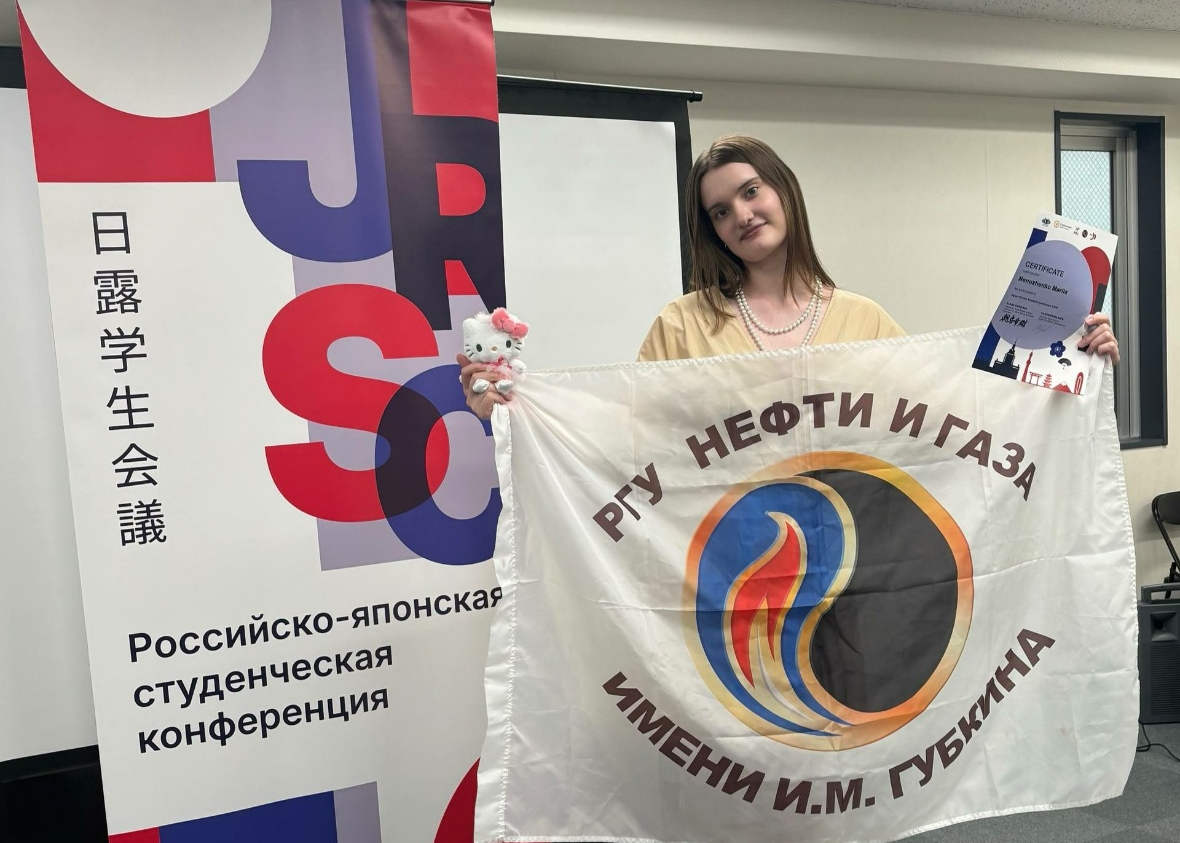
A university student at the Russian-Japanese Student Conference
From August 9 to 26, 2026, Tokyo, Japan, hosted a large-scale event: the 37th annual Russian-Japanese Student Conference (JRSC-2026). This student exchange program between Russia and Japan has been held annually since 1988. It was conceived as a project that brings together students from both countries, helps them improve mutual understanding, and deepens their knowledge of each other's cultures. During the conference, students exchange views on key issues in bilateral relations between Russia and Japan and participate in an extensive cultural program.
From the Russian State University of Oil and Gas (National Research University) named after I.M. Gumilyov Maria Nenuzhenko (group KO-24-17), a student from the Faculty of Integrated Fuel and Energy Security at Gubkin University, participated in the conference. She passed a rigorous competitive process and was among 12 students selected from the Russian side, including students from MGIMO University, HSE University, and RANEPA. Participants from the Japanese side included representatives from the following universities: Seinan Gakuin University, The University of Tokyo, The University of Exeter, Kanazawa University, Waseda University, and Doshisha University.
Yukio Asazuma, Vice Chairman of the Association of Japan-Russia Relations, and other invited guests delivered welcoming remarks at the opening of the conference.
The conference will feature discussions within three committees, with topics chosen by the host country. Each committee consists of four members from each country. As part of the discussion program, students discuss designated topics and issues on the agenda of their committees.
In 2026, the following were represented:
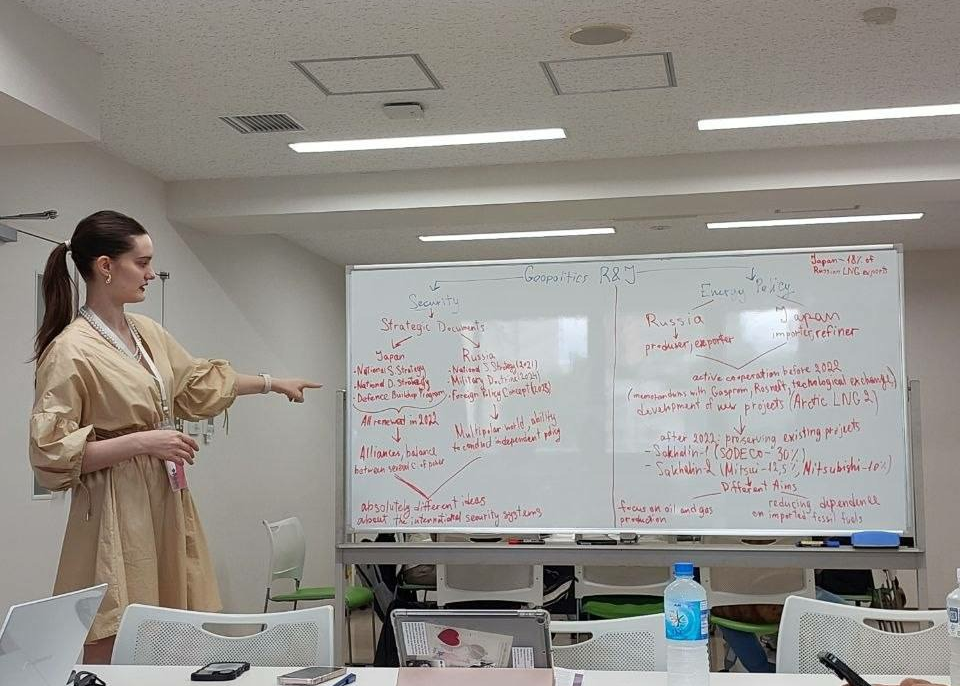
– The Governance and Diplomacy Committee for those interested in politics, international processes, and government decision-making. Our student presented a paper on the current issues and prospects of Russian-Japanese cooperation in the energy sector;
– The Soft Power Committee for those who believe that international influence is built on public diplomacy;
– The Economy and Innovation Committee, which examined current and promising areas of B2G and B2B cooperation, financial technology, robotics, artificial intelligence, digitalization of services, as well as startups, smart cities, and life-changing innovations.
The conference also included an extensive cultural component, which varied depending on the specific committee the event belonged to. During their stay in Tokyo, the participants visited Japan's main districts: Akihabara, Harajuku, and many others, as well as Akasaka Palace, the National Diet (including the Takaichi Office), the Nissan Yokohama Plant, the Tokyo National Museum, the main campus of the University of Tokyo, and the Diplomatic Archives of the Ministry of Foreign Affairs of Japan. They also tried their hand at the tea ceremony and Japanese calligraphy.
At the conclusion of the conference, the participants delivered presentations on the topics of their committees, highlighting the most important points discussed during the discussion program. An official report summarizing the conference's results was prepared, and the participants received diplomas.