University International Students Among Winners of the World Russian Language Championship
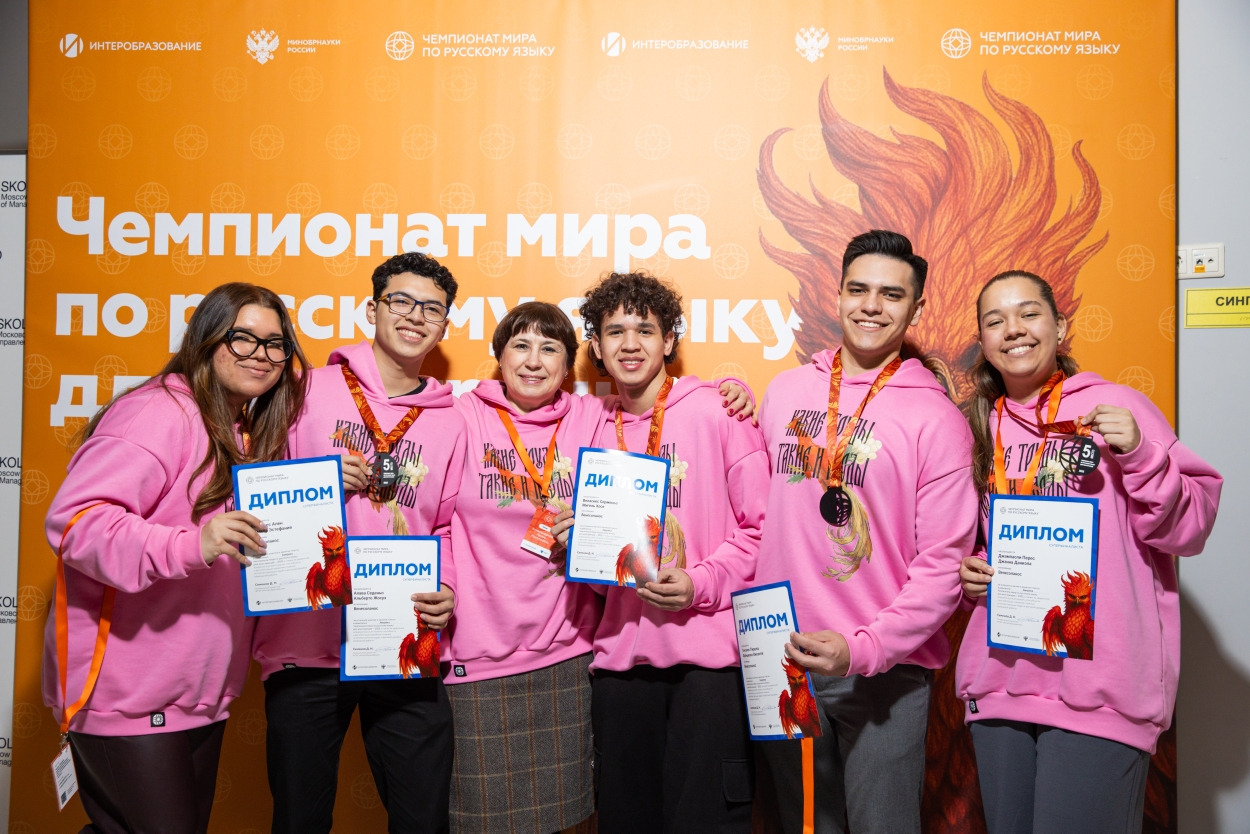
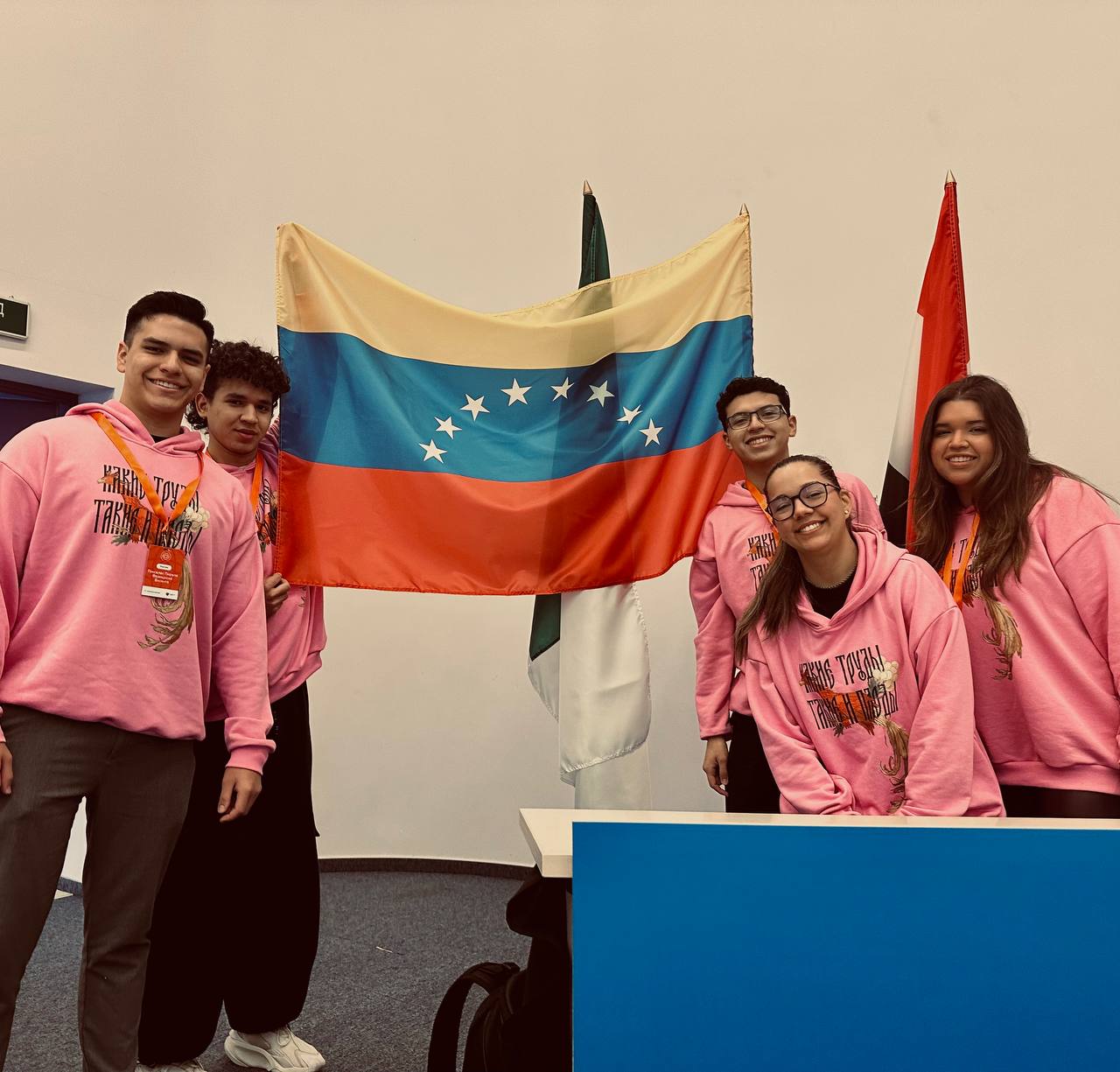
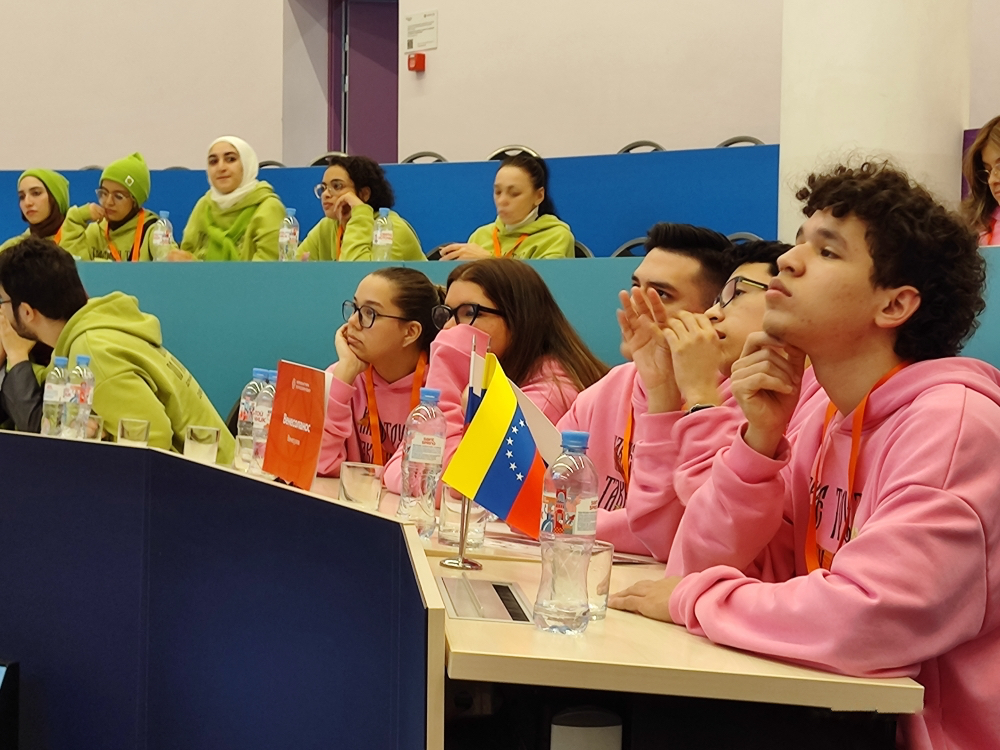
On December 17, 2025, the "Venesolanos" team, representing Gubkin University, won first place in the Americas division at the final stage of the World Russian Language Championship for Foreigners, held in Moscow. The team included students Miguel Velasquez, Gianna Giampaoli, Francisco González, Alberto Alava, and Camila Velasquez. Irina Aleksandrova, a senior lecturer in the Russian Language Department, coached the team.
The championship, which attracted over 4,500 participants from 66 countries, is the largest of its kind and is held with the support of the Russian Ministry of Education and Science. The 2025 competition, held for the second time, offered participants a unique challenge focused on teamwork and creativity.
The event organizers abandoned traditional exams in favor of exciting competitions and interactive formats: debates, discussions, blitz games, and engaging quests. This approach fostered creativity, logical thinking, resourcefulness, and team spirit, while the Russian language became a modern bridge connecting people from all corners of the planet.
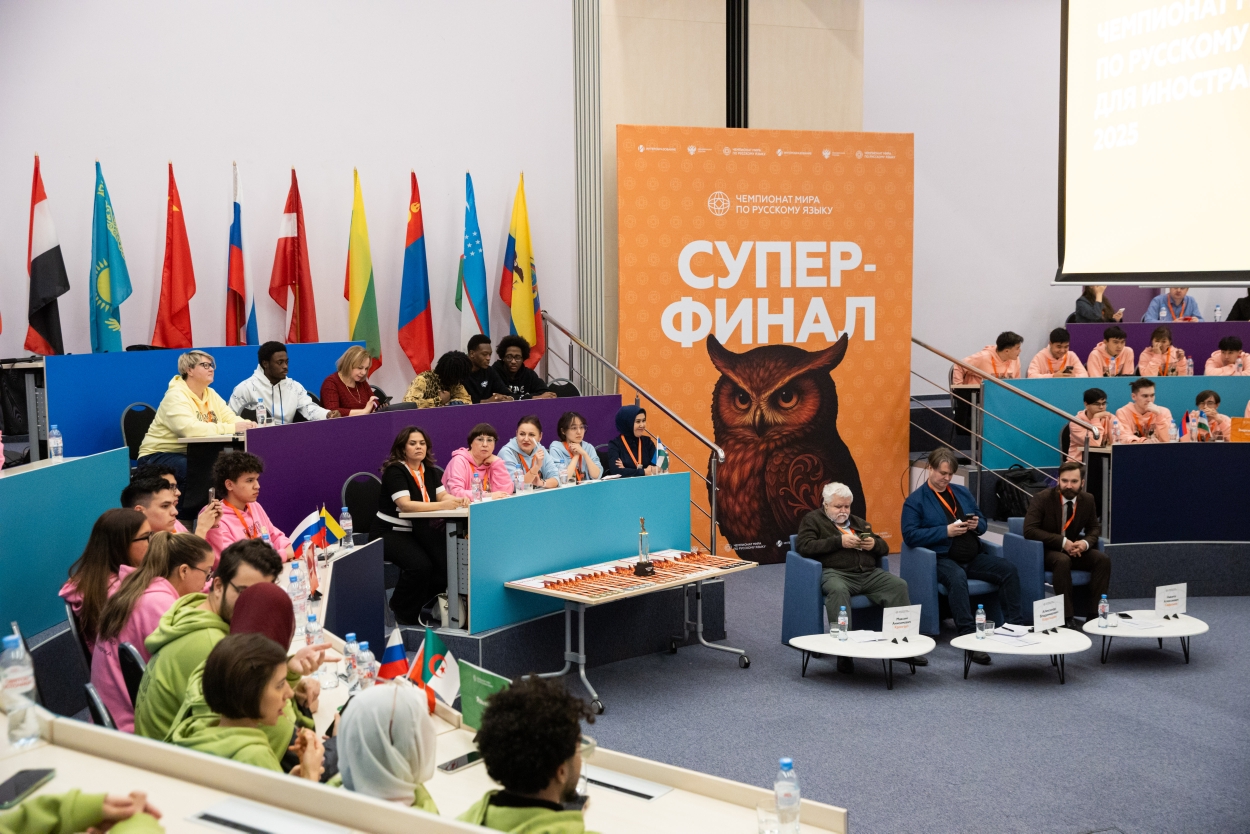
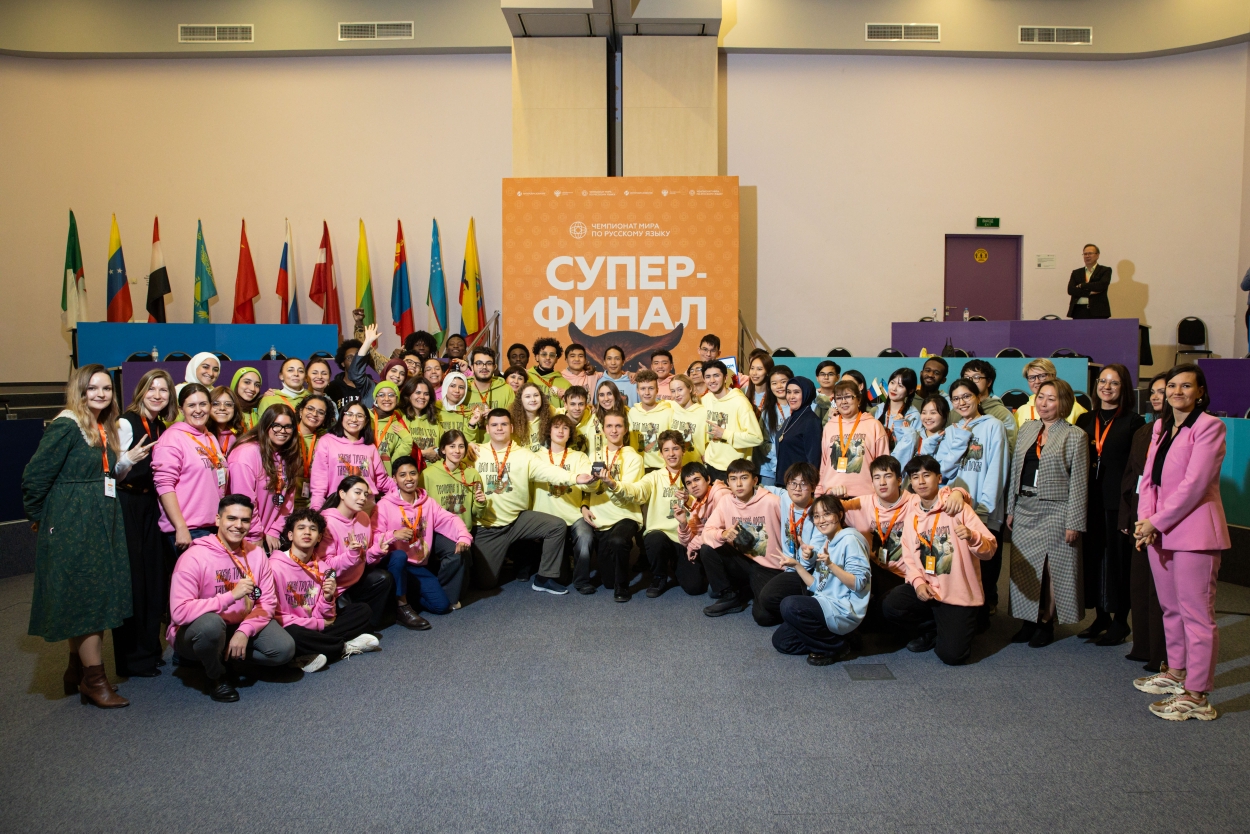
In the Moscow final of the Americas division, the Gubkin University team defeated the EquaSputnik team from Ecuador, taking first place. The superfinal, which pitted the strongest representatives from Lithuania, Uzbekistan, China, Egypt, Algeria, Tunisia, and Venezolanos, was a fierce competition. Participants completed a challenging real-time quest at the Skolkovo Innovation Center.
Competitors were offered a rich cultural program, including visits to iconic Moscow sites such as the Conservatory, Red Square, Moskvarium, VDNKh, and Patriot Park.
Beyond its educational component, the World Russian Language Championship for Foreigners promotes cultural exchange and strengthens friendly ties between countries. Participants have a unique opportunity to learn about Russia's rich history and culture, as well as establish contacts with like-minded people from around the world.
"Public diplomacy is particularly important in the current climate, a time of acute crisis in international relations. Its goal is to build a just, democratic, and multipolar world order, support cultural exchange, and joint scientific and socially significant projects aimed at improving the quality of life in various countries. We live in an overly politicized information reality, rife with distortions and falsehoods, so it's crucial to develop public diplomacy to overcome misunderstandings," said Alexander Maksimenko, Vice Rector for International Affairs at Gubkin University, sharing his thoughts on the championship.